I have spent most of my life trying to understand what makes us human.
I am a psychologist, medium, teacher and writer.
For more than twenty years, my work has moved through worlds that don’t always sit comfortably beside one another — psychology and spirituality, business and social impact, leadership and healing, intuition and critical thinking.
For a long time, I thought I needed to find the thread that connected them.
Eventually I realised the thread was the question I had been asking all along:
How does what we believe change the way we live?
That question has shaped my work, my choices and, increasingly, the way I understand spirituality itself.
It started with a question
I grew up in the Black Forest, surrounded by mountains and trees, with a childhood marked by safety and freedom.
I knew early that this was a privilege.
Music was one of my first teachers. I remember lying on my bed listening to Dangerous by Michael Jackson, painting peace signs and wondering:
Why do some children not get to live as freely as I do? What can I do to change that?
I didn’t have language for it then, but I think this was the beginning of a lifelong fascination with the relationship between our inner world and the world we create around us.
Psychology gave me one way of understanding us
I studied psychology because I wanted to understand people.
Why do we behave the way we do?
How are we shaped by our experiences?
Why do we repeat patterns even when we understand them?
What allows people to change?
My training eventually expanded into systemic-integrative therapy, coaching, emotional and somatic work, meditation and human development.
But psychology never answered every question I had.
And I don’t think it needs to.
Then life took me somewhere else
For years, I worked in advertising and business.
One particular moment stayed with me.
I was in Los Angeles on the set of a multi-million-euro campaign. Almost €100 million was about to be spent convincing people of a narrative I no longer believed in.
At the same time, I was struggling to fund a small initiative advocating for children’s rights.
I remember thinking:
This is not right. This is not why I’m here.
I left that world and began building a different kind of career.
Not a particularly linear one.
What followed was twenty years of trying to make change practical
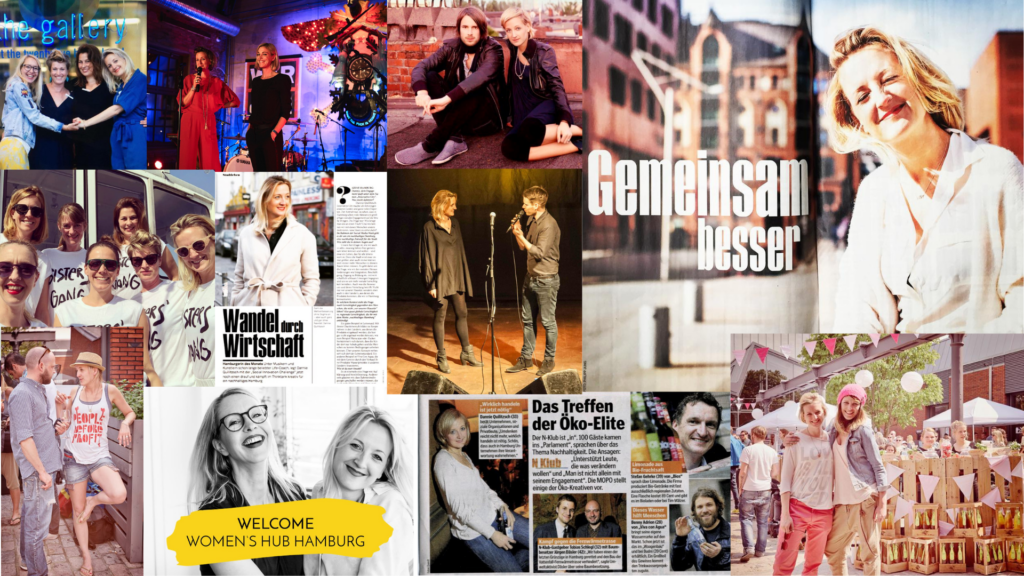
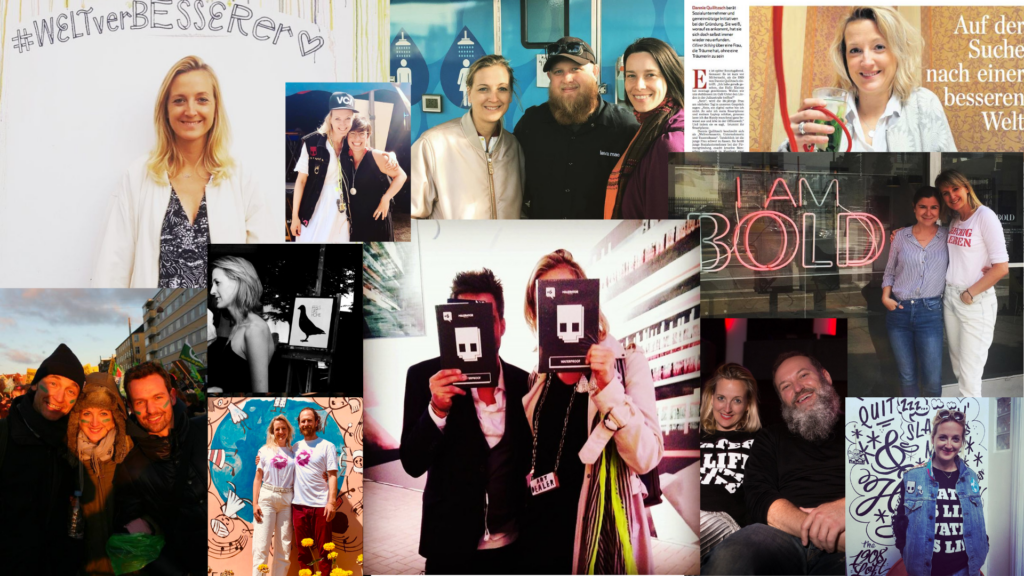
I co-founded, built, advised and supported organisations working across sustainability, education, social entrepreneurship, leadership and global development.
That included work with Utopia.de, Viva con Agua, GoTeach with DHL, SOS Children’s Villages and Teach For All, Social Impact Lab and many others.
Some of those initiatives eventually reached millions of people.
But the thing that stayed with me wasn’t scale alone.
It was something much simpler:
Ideas only matter when they change what we do.
Sustainability matters when it changes how we consume.
Social responsibility matters when it changes where we put our resources.
Leadership matters when it changes how we treat people.
Awareness matters when it changes a choice.
I didn’t know it then, but the same question would eventually lead me back to spirituality.
And then spirituality became harder to separate from the rest
My spiritual life wasn’t a sudden awakening.
It unfolded over years.
Through meditation. Healing. Intuition. Teachers. Places. Experiences I could explain psychologically — and others I couldn’t explain quite so easily.
Eventually, through mediumship.
Mediumship profoundly changed the questions I was willing to ask about consciousness, death and what it means to be human.
It didn’t make me less interested in psychology.
It made me more interested in discernment.
What is intuition?
What is fear?
What is projection?
What comes from our history?
What do we simply want to be true?
And are there aspects of consciousness we still don’t understand?
I don’t believe we need to force one framework to explain the entire human experience.
Psychology gives us extraordinary ways of understanding the mind, behaviour, attachment, trauma and relationships.
Spiritual traditions have spent thousands of years exploring consciousness, meaning, death and our relationship with something larger than ourselves.
My work lives somewhere in the conversation between them.
Then I tried to live it
At some point, studying spirituality was no longer enough for me.
I wanted to know what happened when I actually trusted the things I said I believed.
I left my job.
I gave up my apartment.
I followed intuition into places and decisions I couldn’t always rationally explain.
I lived for years without a permanent home.
I found important parts of myself in the Black Forest, Kaua‘i, Egypt and South Africa.
And none of this made life permanently easier.
Sometimes I trusted.
Sometimes I was terrified.
Sometimes intuition felt unmistakably clear.
Sometimes I couldn’t tell intuition from what I desperately wanted to be true.
I could understand non-attachment beautifully and still want a home.
I could teach trust and still worry about money.
I could believe that consciousness might continue beyond death and still behave as though I had unlimited time.
And gradually, that gap became more interesting to me than the teaching itself.
Spirituality, Lived.
Today, much of my work begins with one question:
If what we believe about life, consciousness and our place in the world is actually true — how should we live?
What does trust look like when life doesn’t follow the plan?
Can we desire love, money, success and belonging without allowing them to determine our inner freedom?
How do we distinguish intuition from fear, projection or wishful thinking?
What does interconnectedness demand of us when we encounter someone we dislike?
If consciousness is more than the brain, does that change our relationship with death — and therefore with life?
What happens when spiritual people acquire money, authority or power?
And how do we bring spiritual practice into ordinary human life without using it to escape that life?
These are not questions I have finished answering.
They are the questions I live.
Spirituality, Lived. is the body of work growing from that inquiry.
What I believe about teaching
I don’t want to become the authority over another person’s life.
Whether I am working as a psychologist, medium, teacher, advisor or mentor, I am interested in helping people develop something much more important:
their own discernment.
I believe we can learn from psychology without reducing everything to psychology.
We can explore spirituality without abandoning critical thinking.
We can listen to intuition while remaining willing to be wrong.
We can seek teachers without surrendering our authority to them.
And we can hold profound spiritual beliefs while continuing to question what we think we know.
One principle increasingly sits underneath everything I teach:
Never ask someone to surrender their discernment in order to follow your teaching.
I am still living the questions
I teach.
I write.
I work with people individually.
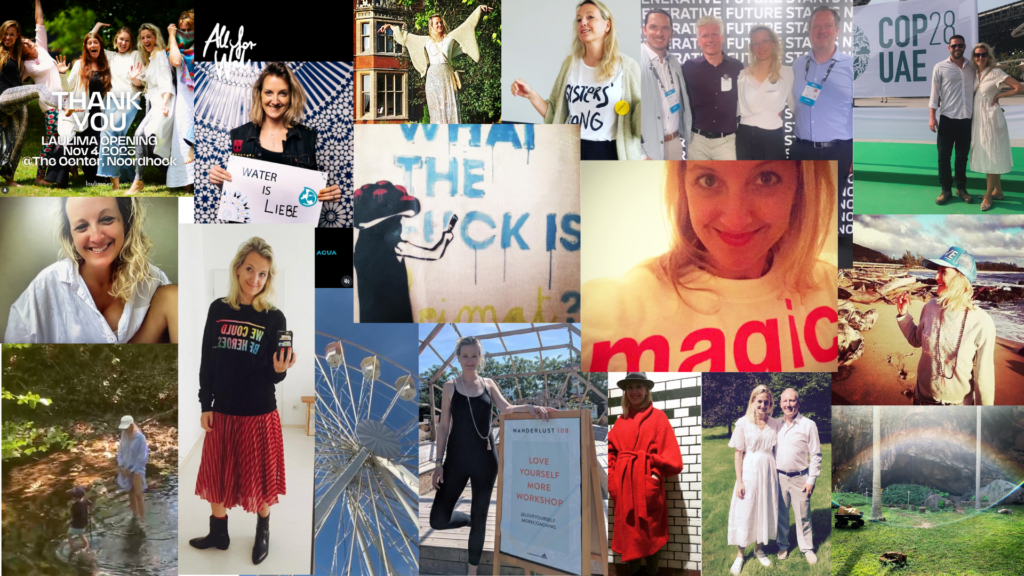
I develop spiritual and healing education through LAULIMA.
I study and practise mediumship.
I advise leaders and organisations.
I create retreats and spaces where people can explore these questions together.
And I remain a student.
Because I don’t think a spiritual life is one in which we finally transcend fear, ego, attachment, anger, uncertainty or doubt.
I’m becoming much more interested in something else:
How consciously can we meet the experience of being human?
How do we love?
How do we respond to fear?
What do we do with power?
How do we treat someone who cannot give us anything?
What do we do when life doesn’t choose what we wanted?
What do we create with what we’ve been given?
And when we realise we’re not living according to what we say we believe —
are we willing to make another choice?
Spirituality becomes meaningful when it changes how we live.
I don’t always get this right.
But I try to live it.